Art Deco Interior Design: A Guide for Aspiring Interior Designers
Most decorators try to add luxury with expensive trinkets. Real experts use geometry and light to build authority into the room itself. Art deco style allows you to command a space through structured patterns and high-performance materials. Learn how to stop simply filling rooms and start using art deco interior design for maximum impact.
In short, here are the basics.
- Master the Aesthetic: Art deco interiors rely on bold art deco patterns like zigzags, triangles, and sunburst motifs.
- Choose Materials: Incorporate chrome, stainless steel, glass, and lacquer. We also suggest using exotic woods like ebony alongside silk and velvet to create unique art deco characteristics.
- Embrace Colours: Try using deep yellows, reds, greens, and blues. Balance these with black and chrome accents to create a refined art deco colour palette.
By understanding the key elements of art deco style, you can create an interior that exudes glamour and timeless appeal. Whether you're updating a single room or designing an entire space, incorporating geometric patterns and a bold colour scheme will help you capture the essence of this iconic era.
Image source: Pinterest
What is Art Deco Interior Style?
Art deco interior style started at the 1925 Paris Exhibition. This event debuted new ideas that soon transformed the United Kingdom. This 1920s original art deco interior design stood for modern sophistication and hope for technology. Collectors often refer to this era as art deco 1920.
UK architects applied geometric logic to the London Underground stations and the Hoover Building. The look defined British industrial power throughout the 1920s and 1930s. It also drove luxury hotel design in London's West End. This version paired European elegance with reliable British craftsmanship.
Key Art Deco Characteristics and Patterns
Geometric Shapes and Motifs
Art deco interior design style is renowned for its emphasis on simple, streamlined forms and symmetrical designs. Geometric art deco patterns including zigzags, triangles, and sunburst motifs are staples of the aesthetic. These shapes provide a sense of elegance and order. You can use these patterns in floor tiles or wall coverings to ground a room.
Art Deco Materials and Textures
The use of high-end art deco materials like chrome and lacquer highlights the luxury that defines these interiors. You can layer textures by mixing hard surfaces like glass or marble with soft velvets. This contrast creates the depth needed for a high-end look. In British homes, this often includes the use of Crittall-style internal doors to let light flow between spaces while maintaining a structured frame.
Bold Art Deco Colour Palette
An art deco colour palette is typically bold. We often use deep yellows, reds, greens, and blues. These are complemented by black and chrome to enhance the feeling of drama. Choosing the right colours helps you set a professional mood in a project. In UK property styling, we often see these bold tones used in sun trap rooms to maximise the impact of natural light.
Art Deco Interior Design Ideas for Every Room
Furniture
Pieces feature sleek and streamlined forms. They often use a combination of different materials such as wood, leather, and metal. Look for decorative inlays and polished finishes to ground your art deco interior. In Britain, this often involves walnut-heavy palettes for sideboards and dressing tables to add warmth to cooler room orientations.
Lighting
Lighting fixtures in this style are dramatic art pieces. They feature materials like glass and chrome. Their shapes complement other geometric forms in the space to create a cohesive look. British designs often favour tiered glass pendants that mimic the tiered architecture of 1930s cinemas.
Decorative Accents
Mirrors and inlays are common. They add a sense of depth and brightness to a room. You should use these pieces to reflect light and make smaller UK terrace rooms feel more expansive. Accents frequently feature colourful lacquer or frosted glass to add a touch of industrial character.
Image source: Pinterest
Applying Art Deco Principles in Interior Design
Space Planning
When you incorporate these design elements, consider how to balance decorative pieces with the functional layout. This helps you maintain a sleek and uncluttered space. In the UK, designers often used grand hallways and circular entrance foyers to create a sense of arrival. These concepts connected social areas to make entertaining feel effortless.
Colour Schemes
Choosing the right colour scheme is vital. Use bold and sophisticated colours in a balanced way. This strategy allows you to highlight the most luxurious aspects of your design. Designers in London frequently chose high-contrast pairs like black and white to mimic the glamour of the early jazz clubs. Plus, using gold and silver metallic finishes added a sense of luxury that defines the high-end British look.
Inspiring Art Deco Interiors: UK Case Studies
Eltham Palace
Eltham Palace is a masterpiece of British 1930s design. The entrance hall features a spectacular circular glass dome and light wood panelling. It shows the transition from medieval roots to high-modern luxury. The space uses custom-made furniture and symmetrical layouts to create one of the most famous art deco interiors in the country.
The Hoover Building
The Hoover Building is a former factory that exemplifies art deco architecture in the UK. The design uses primary colours and grand, vertical lines. The interior spaces have been adapted into modern flats that still use the original geometric window frames and airy floor plans. It serves as an excellent study in how industrial sites can become high-end residential projects.
The Savoy
The Savoy was one of the first locations in London to embrace the art deco style. The hotel features chrome lifts, chequered floors, and mirrored walls. It shows how the style can be used to create a sense of prestige and history. The Savoy remains a benchmark for designers looking to master the balance of tradition and modernity.
Image source: Pinterest
Tips for Aspiring Interior Designers
- Study British Architectural Motifs: Look at the 1930s sun trap houses and London Underground branding to see how the UK adapted geometry for public and private use.
- Mix Materials: Pair polished chrome with natural British timber like oak or walnut to create surfaces that feel both cold and warm.
- Layer Lighting: Use tiered glass lamps or shell-shaped wall sconces as focal points to add height to a room.
- Master Scale: Use large-scale patterns in rugs or curtains to define the boundaries of an open-plan living space.
- Focus on the Frame: Choose internal doors with slim black frames to capture the spirit of British industrial progress.
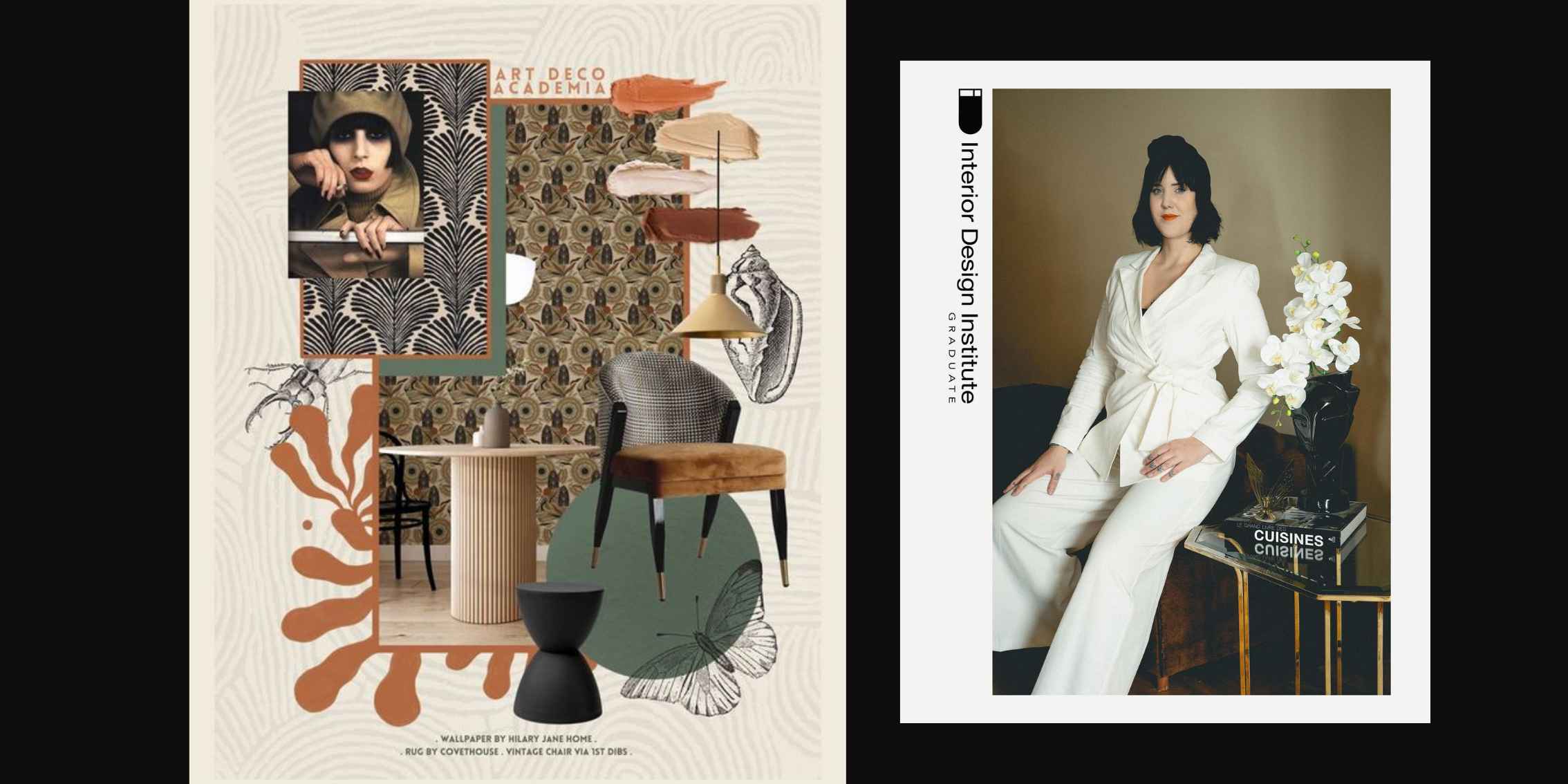
Image source: #IDIstudent Hilary Jane from @hilaryjanehome
Nurture Your Talent with an Interior Design Course
Mastering art deco interior design requires a grasp of design history to create high-end spaces. Our online interior design course provides the technical skills and historical context you need to lead successful projects. You'll explore design from its ancient origins to the present day, learning to identify the classic details that shaped the geometric rules of the 1920s. Through practical assignments, you will build professional mood boards to master any style. Download your free course guide today and turn your passion for design into a thriving career.










 Argentina
 Australia
 Austria
 Belgium (FR)
 Bolivia
 Canada (FR)
 Chile
Chile
 Colombia
 Costa Rica
 Ecuador
 France
 Germany
 Hong Kong
 India
India
 Indonesia
 Ireland
 Japan
Japan
 Malaysia
 Mexico
 Netherlands
 New Zealand
 Paraguay
 Peru
Peru
 Philippines
 Qatar
Qatar
 Singapore
 South Africa
 Spain
Spain
 Switzerland (FR)
 United Arab Emirates
 United States (EN)
 Uruguay