Art Deco Interior Design in Australia: A Guide for Aspiring Designers
Walking past the Manchester Unity Building in Melbourne gives you a direct look at the power of geometric order. Those sharp lines and gold leaf details aren't just for show. They teach us how to command a room using symmetry instead of just cluttering it with items. We've written this guide to help you use Art Deco interior design in Australia. You'll learn how to stop filling spaces and start designing them for maximum impact.
In short, here are the basics.
- Master the Aesthetic: Art Deco interiors rely on bold patterns like zigzags, triangles, and sunburst motifs.
- Choose Materials: Incorporate chrome, stainless steel, glass, and lacquer. We also suggest using exotic woods like ebony alongside silk and velvet to create unique Art Deco inspired interiors.
- Embrace Colours: Try using deep yellows, reds, greens, and blues. Balance these with black and chrome accents to create a refined Art Deco colour palette.
By understanding the key elements of Art Deco style, you can create an interior that exudes glamour and timeless appeal. Whether you're updating a single room or designing an entire Art Deco house interior, incorporating geometric patterns and a bold colour scheme will help you capture the essence of this iconic era.
Image source: Pinterest
What is Traditional Art Deco Interior Design?
Traditional Art Deco interior design started at the 1920 Paris Exhibition. This event debuted new ideas that soon reached Australian shores. This 1920s original style stood for modern sophistication and hope for technology.
In Australia, the style transformed our city centres. Architects used these geometric rules to design monuments like the Manchester Unity Building in Melbourne and the Grace Building in Sydney. The look defined Australian industrial power throughout the 1920s and 1930s. It also influenced high-end apartment living in Potts Point and St Kilda. This Australian adaptation mixed European elegance with the hardy materials needed for our climate.
Key Art Deco Characteristics and 1920s Furniture
Geometric Shapes and Motifs
Art Deco interior design in Australia is renowned for its emphasis on simple, streamlined forms and symmetrical designs. Specific Art Deco characteristics include zigzags, triangles, and sunburst motifs. These shapes provide a sense of elegance and order. You can use these patterns in carpet designs or wall panels to ground a room.
Materials and Art Deco Window Treatments
The use of high-end materials like chrome and lacquer highlights the luxury that defines these interiors. You can layer textures by mixing hard surfaces like marble with soft velvets. This contrast creates the depth needed for a high-end look. In Australian homes, Art Deco window treatments often feature heavy velvet drapes with geometric pelmets to manage light and heat. You can also use frosted glass partitions to let light flow between rooms while keeping a structured frame.
Art Deco Colour Schemes Interior
An Art Deco colour palette is typically bold. We often use deep yellows, reds, greens, and blues. These are complemented by black and chrome to enhance the feeling of drama. Choosing the right Art Deco colour scheme helps you set a professional mood in a project. In AU coastal properties, we often see these bold tones used in sun trap rooms to maximise the impact of natural light.
Modern Art Deco Interior Design Ideas
1920s Furniture
Pieces feature sleek and streamlined forms. They often use a combination of different materials such as wood, leather, and metal. Look for decorative inlays and polished finishes to ground your Art Deco design. In Australia, this often involves walnut-heavy 1920s furniture for sideboards and dressing tables to add warmth to cooler room orientations.
Lighting
Lighting fixtures in this style are dramatic art pieces. They feature materials like glass and chrome. Their shapes complement other geometric forms in the space to create a cohesive look. Australian designs often favour tiered glass pendants that mimic the skyscraper architecture of the era.
Decorative Accents
Mirrors and inlays are common. They add a sense of depth and brightness to a room. You should use these pieces to reflect light and make smaller urban rooms feel more expansive. Accents often feature colourful lacquer or Bakelite to add a touch of industrial character to the space.
Image source: Pinterest
Applying Art Deco Principles in Interior Design
Space Planning
When you incorporate these design elements, consider how to balance decorative pieces with the functional layout. This helps you keep a sleek and uncluttered space. In Australia, designers often used grand entryways and circular foyers to create a sense of arrival. These concepts connected social areas to make entertaining feel effortless.
Colour Schemes
Choosing the right colour scheme is vital. Use bold and sophisticated colours in a balanced way. This strategy allows you to highlight the most luxurious aspects of your design. Designers in Sydney often chose high-contrast pairs like black and white to mimic the glamour of the early jazz age. Also, using gold and silver metallic finishes added a sense of luxury that defines the high-end Australian look.
Inspiring Art Deco Interiors: Australian Case Studies
Manchester Unity Building, Melbourne
A masterpiece of Australian Art Deco design, Manchester Unity Building features a spectacular ground floor arcade with ornate carvings and black marble. It shows the transition from gothic roots to high-modern luxury. The space uses symmetrical layouts and rich metals to create one of the most famous Art Deco interiors in the country.
The Grace Building, Sydney
As a former department store and office building, The Grace Building shows the scale of Art Deco architecture. The design uses grand, vertical lines and decorative terracotta. The interior spaces have been adapted into a hotel that still uses the original geometric motifs and airy floor plans. It serves as an excellent study in how commercial sites become high-end residential projects.
Anzac Memorial, Sydney
The Anzac Memorial is a prime example of the Stripped Classical Art Deco style. It features bold sculptures and symmetrical granite forms. The interior uses light and reflection to create a sense of prestige and history. It remains a benchmark for designers looking to master the balance of solemnity and modernity.
Image source: Pinterest
Tips for Aspiring Interior Designers
- Study Australian Architectural Motifs: Look at the 1930s sun trap houses and regional cinemas to see how Australia adapted geometry for public and private use.
- Mix Materials: Pair polished chrome with natural Australian timber like Spotted Gum or Blackbutt to create surfaces that feel both cool and warm.
- Layer Lighting: Use tiered glass lamps or shell-shaped wall sconces as focal points to add height to a room.
- Master Scale: Use large-scale patterns in rugs or curtains to define the boundaries of an open-plan living space.
- Focus on the Frame: Choose internal doors with slim black frames to capture the spirit of industrial progress while managing the Australian light.
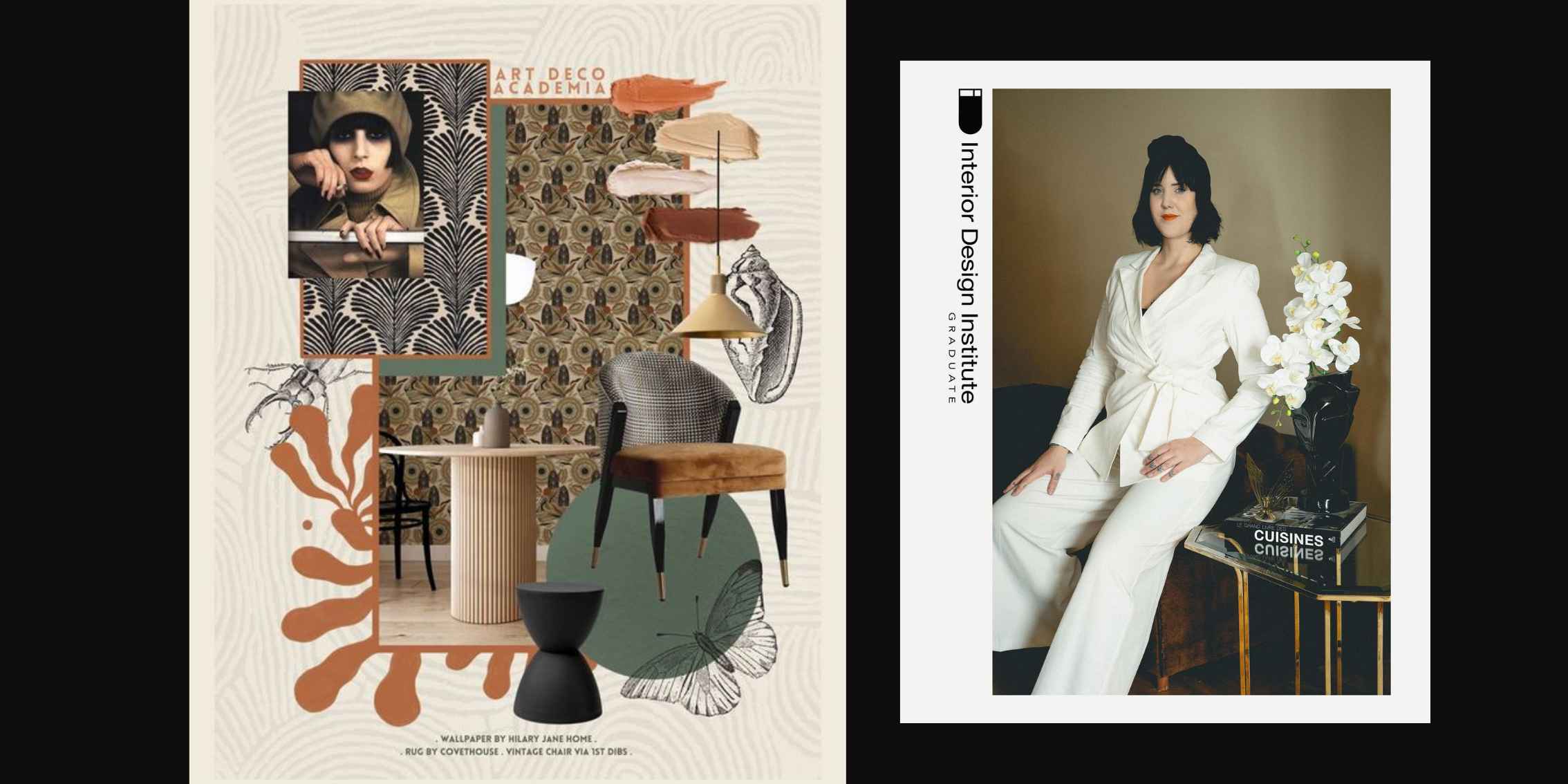
Image source: #IDIstudent Hilary Jane from @hilaryjanehome
Build Professional Expertise with an Interior Design Course
Art Deco interior design proves that bold geometry and rich materials never go out of style. Our online interior design course explores this movement in depth alongside other influential styles. We place it within the broader history of architecture to help you understand its origins.
Understanding where design comes from is key to designing well today. Learning the logic behind iconic layouts helps you build a stronger design vocabulary. We'll give you the tools to use historical principles in modern projects that feel intentional and layered.
Art Deco is a highly effective style to master. From the bold shapes to the high-end finishes, it is a style worth knowing inside and out. Explore our interior design courses today and download the free course guide to continue your learning.










 Argentina
 Austria
 Belgium (NL)
 Bolivia
 Canada (FR)
 Chile
Chile
 Colombia
 Costa Rica
 Ecuador
 France
 Germany
 Hong Kong
 India
India
 Indonesia
 Ireland
 Japan
Japan
 Malaysia
 Mexico
 Netherlands
 New Zealand
 Paraguay
 Peru
Peru
 Philippines
 Qatar
Qatar
 Singapore
 South Africa
 Spain
Spain
 Switzerland (FR)
 United Arab Emirates
 United Kingdom
 United States (EN)
 Uruguay