Tips for Working with the 7 Elements of Design in America
An Introduction to the Seven Elements
The secret to crafting an exceptional American interior, whether it's a high-rise loft or a suburban Colonial, lies in mastering the seven core elements of design. These elements of design - space, line, form, texture, color, light, and pattern - are the essential ingredients of design, each playing a unique role in shaping the environments we inhabit. Understanding and skillfully applying these elements allows designers to craft spaces that are balanced, engaging, and reflective of individual style.
The interplay of these elements can dramatically alter a space's feel, functionality, and aesthetic appeal. For example, the careful manipulation of space and light can transform a cramped room into a serene retreat, while the strategic use of color and texture can infuse a space with warmth and vibrancy. Just as a chef combines flavors to create a culinary masterpiece, designers blend these elements to achieve a harmonious and compelling space.
These design principles transcend individual disciplines, finding relevance in everything from architecture to fashion. However, in interior design, their application must balance aesthetic appeal with practicality, creating environments that are not only beautiful but also livable. This guide offers practical tips and insights into each of the seven elements, focusing on key American examples and historical context to help emerging US designers understand their application. It empowers you to apply these principles to your personal projects and explore the limitless possibilities of interior design.
Understanding and manipulating space is fundamental to interior design. Space can be defined by the physical boundaries of a room and how these boundaries are perceived. It involves the arrangement of objects within a given area and how this arrangement affects functionality and aesthetic appeal.
In short…
- Balance and Harmony: Achieve visual calm with design elements like furniture and art. Even distribution avoids visual clutter common in smaller urban US spaces.
- Contrast and Rhythm: Discover how Mid-Century Modern uses materials like glass, exposed brick, and repeating motifs: a hallmark of enduring American design styles.
- Proportion and Emphasis: Maintain scale awareness, especially when furnishing large US homes. Use lighting or a focal piece to draw attention to key design features.
Mastering these seven elements will help you create spaces that are not only aesthetically pleasing but also functional and harmonious.
Element 1: Mastering the Art of Space
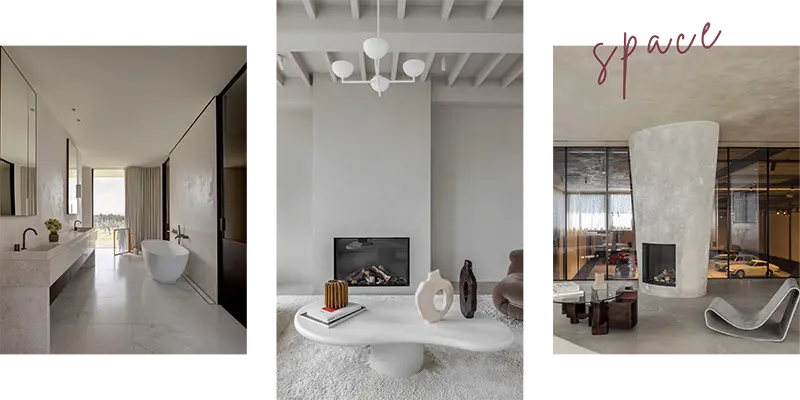
Understanding and manipulating space is fundamental to interior design. Space can be defined by the physical boundaries of a room and how these boundaries are perceived. It involves the arrangement of objects within a given area and how this arrangement affects functionality and aesthetic appeal.

Image source: Yellow Trace
Understanding Positive and Negative Spaces
Tip: Consider using furniture and decor to define positive and negative spaces, creating dynamic and functional areas within a room.
"Incorporating an elemental sofa to delineate the lounge area while leaving open pathways with strategically placed accent chairs can establish positive and negative spaces, offering both cohesion and movement."
Positive space is occupied by objects, while negative space refers to the open, unoccupied areas. Striking the right balance between these spaces can enhance a room's flow and make it feel more intentional and welcoming.
Frank Lloyd Wright's mastery of space in Fallingwater remains the quintessential American realization of the design element. In this design, the vast, cantilevered terraces, which are the positive space, are dramatically juxtaposed against the surrounding air and natural environment, emphasizing the building's core geometry.
It's important to note that in contemporary US interior design, the strategic use of space is more than just an aesthetic choice and must often comply with regulations. For example, considering ADA (Americans with Disabilities Act) guidelines when planning clear floor space and pathways ensures a functional and accessible environment for all users.
Experiment with furniture arrangements to find the most effective use of space in your home. By playing with the placement of objects and considering their scale and proportion, you can discover new ways to optimize both the functionality and aesthetic appeal of your living spaces.
This exploration of space sets the stage for the subsequent elements of design, each building upon the last to create well-rounded, harmonious spaces that resonate with those who inhabit them.
Creating Balance through Spatial Arrangement
Tip: Use a focal point to anchor the space, allowing for a harmonious arrangement of furniture and decor around it.
"Positioning a statement piece like an oversized mirror or a striking piece of art as the focal point can guide the spatial arrangement, creating a balanced and visually appealing composition."
Creating a balanced interior space involves more than just symmetry; it's about arranging elements in a way that promotes harmony and flow. Kelly Wearstler's designs, for instance, showcase an exquisite balance between bold patterns and serene spaces, utilizing focal points to anchor each room's design. Similarly, Jamie Bush's residential design work across Southern California masterfully uses scale and proportion to balance vintage forms with modernist architecture, creating a uniquely American aesthetic of luxurious comfort.
Experimenting with different focal points in your space—whether it's art, furniture, or architectural design features—can significantly impact the room's overall balance and aesthetic. It's an opportunity to explore how various elements can converge to create a cohesive look.
Utilizing Zoning for Functional Spaces
Tip: Use architectural elements like dividers or different flooring materials to delineate functional zones within an open space.
"In an open-concept living space, using a rug to define the seating area and a pendant light to highlight the dining space creates distinct zones, optimizing both form and function."
Zoning is crucial in open-plan spaces, where distinct areas need to be defined without the use of walls. Charles and Ray Eames in their iconic Case Study House #8 (The Eames House) which masterfully uses structure and color to create distinct, functional living and working zones.
By experimenting with zoning in your own projects, you can enhance the functionality of a space. Consider how different elements—furniture, lighting, rugs, and room dividers—can work together to create clear, purposeful zones that cater to various activities, from dining and lounging to work and play. This strategic use of space not only improves a room's functionality but also its aesthetic appeal, allowing each zone to have its unique character while still contributing to the overall design narrative.
Element 2: Guiding the Eye with Lines
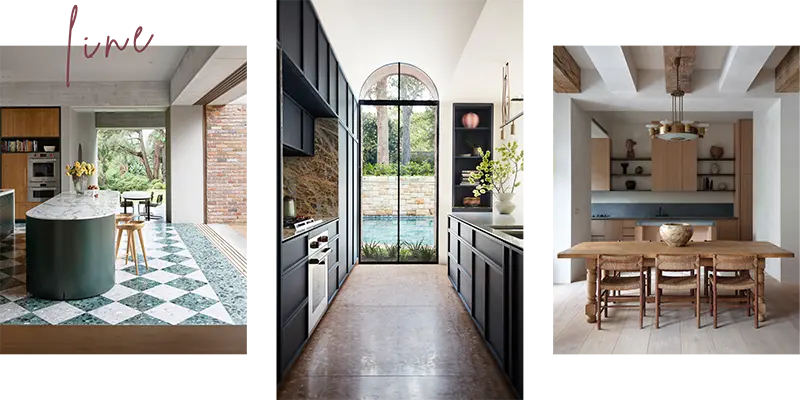
Lines play a pivotal role in directing sight and creating a structured flow within a space. They can guide the viewer's gaze, suggest movement, and significantly impact the room's overall feel.
Image source: Yellow Trace
Emphasizing Directional Lines
Tip: Incorporate lines in the flooring or ceiling to lead the eye and create a sense of movement within a space.
"Installing a herringbone-patterned hardwood floor not only adds visual interest but also directs the eye toward the focal point, creating a dynamic and inviting atmosphere."
Directional lines, whether in architectural features, patterns on the floor, or lines on the ceiling, can effectively guide the viewer's focus to key areas or design features within a space. For instance, the TWA Flight Center at New York's JFK Airport uses the dynamism of its curving, line-driven concrete architecture to masterfully lead the visitor's eye. This principle can be applied on a smaller scale in interior spaces, using line patterns to emphasize focal points and enhance the room's dynamics.
Experiment with various line patterns and orientations to discover how they can subtly or dramatically change the direction and focus within a space, adding depth and interest.
Playing with Horizontal and Vertical Lines
Tip: Use vertical lines to add height and grandeur, while horizontal lines can create a sense of stability and calmness.
"In a room with low ceilings, incorporating vertical elements like floor-to-ceiling curtains or vertical paneling can visually elevate the space, creating an illusion of height."
The orientation of lines within a design can dramatically affect the perception of the space. Vertical lines tend to draw the eye upward, making rooms feel taller, while horizontal lines can make them appear wider and more stable.
Frank Lloyd Wright's masterful use of the horizontal line in his Prairie Style homes, such as the Robie House in Chicago, creates an unmatched sense of stability and harmony with the American landscape. These long, low structures with dramatically overhanging eaves and continuous bands of windows intentionally hug the ground, thereby emphasizing the vast, open plains of the Midwest and visually expanding the perceived size of the home.
Encourage experimentation with line orientations in your designs to manipulate spatial perception, striving for a balanced and aesthetically pleasing environment.
Incorporating Dynamic Diagonal Lines
Tip: Introduce diagonal lines in furniture or accent pieces to inject dynamism and excitement into a room.
"A diagonal bookshelf or a uniquely angled coffee table can introduce a sense of movement and energy, transforming a static room into a dynamic visual experience."
Diagonal lines offer a sense of action and movement, making a space feel more lively and engaging. Frank Gehry's iconic use of dynamic forms, most famously seen in the fluid, curving titanium panels of the Walt Disney Concert Hall in Los Angeles, illustrates how diagonal lines create progression, movement, and a sense of kinetic energy. Gehry's deconstructivist style rejects simple orthogonal geometry, instead using complex, sweeping diagonal lines and irregular shapes to make the structure appear as if it is perpetually in motion.
Experimenting with diagonal lines through furniture placement or decorative elements can breathe life into a room, offering a modern twist and a sense of excitement.
Element 3: Crafting Aesthetic Forms with Shape
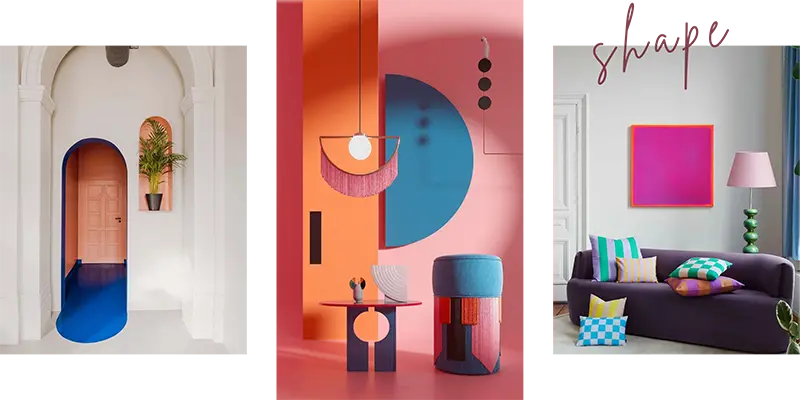
Shape and form in design dictate the contours and outline of spaces and objects within them, influencing both functionality and aesthetics. From organic curves that flow naturally to geometric lines that structure and define, the shapes you choose can tell a story or set a mood.
Image source: Pinterest
Embracing Organic and Geometric Shapes
Tip: Combine organic shapes for a more natural and fluid feel, or opt for geometric shapes for a contemporary and structured look.
"Mixing curvaceous furniture with angular accessories can create a harmonious interplay of organic and geometric shapes, adding depth and character to your design."
Shapes have the power to evoke feelings and set the tone of a room. Organic shapes, inspired by nature, offer a sense of comfort and flow, while geometric shapes bring order and clarity. The enduring popularity of Mid-Century Modern (MCM) design in US home interior design is a prime example of form's power. Geometric and organic forms coexist in MCM furniture, like the iconic Eames Lounge Chair, bringing both structured simplicity and fluid comfort to a space.
Experiment with a mix of shapes in your design projects to find a balance that appeals to your aesthetic preferences and meets the functional needs of the space.
Playing with Negative Space within Forms
Tip: Use negative space intentionally to highlight and emphasize the positive shapes in a design.
"Choosing a minimalist dining table with open space underneath can showcase the negative space, allowing the surrounding chairs to become focal points, merging form and function seamlessly."
Negative space, or the space around and between objects, plays a crucial role in defining how a design is perceived. Philippe Starck's iconic Ghost Chair demonstrates how negative space can be used creatively to blend form and function, making the chair seem almost invisible yet undeniably present and stylish.
Incorporating negative space into your designs not only adds depth but also helps in creating focal points and enhancing the visual clarity of the space.
Balancing Proportions in Form Design
Tip: Consider the scale of furniture and decor elements to maintain a harmonious balance in the overall design.
"In a spacious living room, opt for larger furniture pieces to create a sense of proportion, avoiding overcrowding and ensuring each element complements the overall aesthetic."
Proportion and scale are essential in creating a balanced and cohesive space where every element feels like it belongs. Architect Minoru Yamasaki's application of New Formalism and strict proportion in his large-scale projects, such as the original World Trade Center towers, highlighted how repetitive and carefully spaced vertical elements could achieve aesthetic harmony.
Yamasaki's reliance on Gothic arches and narrow vertical windows was a conscious effort to humanize the immense scale of the towers, using mathematical proportions and symmetry to instill a sense of visual order and delicate refinement within the structure.
Experiment with different proportions and scales in your projects, keeping in mind that the goal is to create a balanced composition that feels both comfortable and visually pleasing.
Element 4: Infusing Life with Color
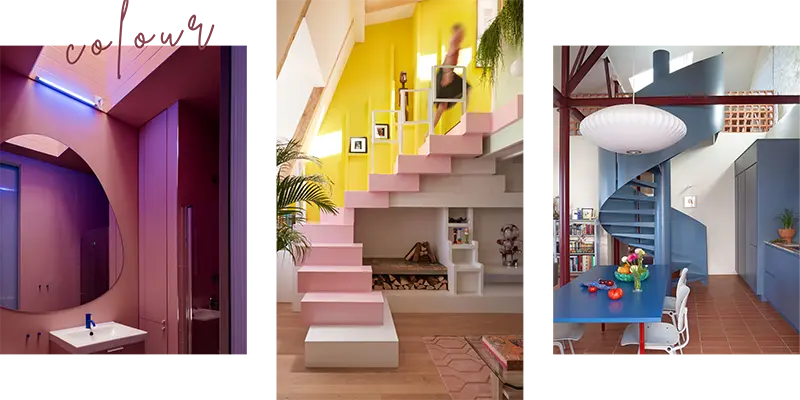
Color, one of the most impactful elements of interior design, influences mood, creates atmosphere, and gives character to spaces. It's a powerful tool in the designer's palette, capable of transforming environments from the mundane to the extraordinary.
Image source: Yellow Trace
Understanding Color Psychology
Tip: Experiment with accent color to evoke specific emotions and create focal points within a room.
"In a bedroom, incorporating vibrant accent pillows or a bold-colored accent wall can evoke energy and passion, transforming the space into a lively and emotionally engaging retreat."
Color psychology explores how hues affect feelings and behaviors. For instance, blue can evoke calmness, while red may stimulate energy and appetite. Jonathan Adler's designs often leverage bold colors to infuse spaces with joy and vivacity, as seen in his Palm Springs residence where vibrant hues create a playful yet sophisticated ambiance.
Embrace the emotional impact of colors in your design projects, using them intentionally to create the desired atmosphere.
Achieving Harmony in Color Palettes
Tip: Use a cohesive color palette throughout a space, incorporating variations in tones and shades for depth.
"Choosing a neutral base of whites and grays and adding pops of a consistent accent color, like navy blue, can create a sophisticated and harmonious color palette in a living room."
Achieving harmony in color palettes is central to the US aesthetic, from the muted minimalism of a West Coast beach house to the bold palettes of a New York City loft. Paint manufacturers like Sherwin-Williams and Benjamin Moore set the tone each year, and a cohesive palette often revolves around their curated collections, bringing a sense of unity to the room.
Encourage experimentation with different color combinations to achieve a balance that resonates with your style while maintaining visual harmony.
Embracing Contrast for Visual Drama
Tip: Pair complementary colors for a dramatic impact, balancing bold choices with more neutral tones.
"In a kitchen, contrasting cabinets with a vibrant backsplash can add visual drama, making the space feel dynamic and visually stimulating."
Color contrast is a dynamic design tool, adding depth and interest to spaces. David Hicks, renowned for his use of bold color contrasts, creating interiors that are memorable for their dramatic visual appeal. This approach can turn an otherwise ordinary space into a striking visual narrative.
Experiment with contrasting colors to create focal points and inject excitement into your designs, ensuring that each space you create is both unique and captivating.
Element 5: Illuminating Spaces with Light
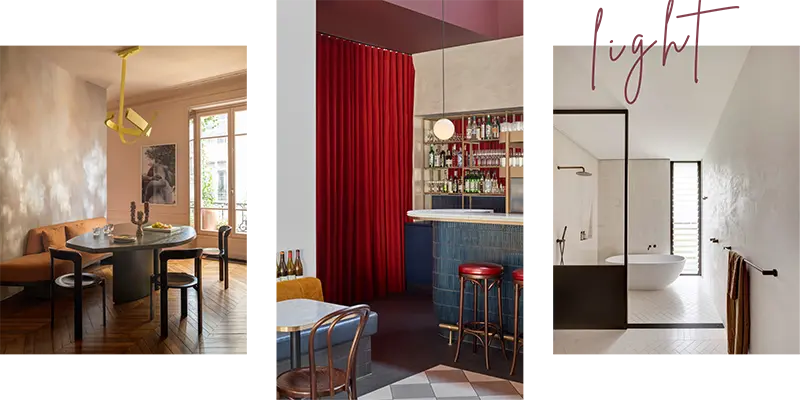
Light shapes our experience of space, affecting mood, color perception, and architectural appreciation. Skillful use of natural and artificial light can highlight design features and set the desired atmosphere.
Image source: Yellow Trace
Harnessing Natural Light for Ambiance
Tip: Enhance natural light with light-colored curtains and strategic mirror placement.
"Opt for sheer curtains that let sunlight filter through and place mirrors to reflect and amplify light, creating a bright, welcoming atmosphere."
Maximizing natural light not only brightens a space but also enhances its overall warmth and appeal. Louis Kahn's designs, like the monumental Salk Institute in La Jolla, California, are celebrated for using natural light not just for illumination, but as a key architectural element to create contemplative, almost spiritual environments.
The central courtyard, paved in travertine, was intentionally left bare to maximize reflection, flooding the surrounding research spaces with soft, uniform, indirect daylight that fosters an atmosphere conducive to deep thought.
Experiment with window treatments and mirror locations to see how they can transform the luminosity and feel of your rooms. The right setup can turn even the darkest space into a sun-drenched sanctuary.
Artful Artificial Lighting Design
Tip: Use unique lighting fixtures as artistic design elements as well as light sources.
"A dramatic pendant light or an artistic floor lamp can serve dual purposes, providing necessary illumination and acting as a stunning visual centerpiece."
Artificial lighting is not just functional; it's an opportunity to inject style and personality into your space. Contemporary American designers like Lindsey Adelman and Jason Miller are celebrated for their bold, sculptural lighting pieces that blend industrial rigor with organic fluidity. Adelman's Branching Bubble chandeliers, which combine delicate hand-blown glass with raw, articulated metal armature, transform the ceiling into a functional art installation. These statement fixtures use exposed bulbs and custom metalwork to introduce a deliberate contrast in texture and form.
Experiment with different lighting fixtures to discover how they can change the mood and ambiance of your interiors. From subtle accent lights to bold sculptural pieces, the choices you make can dramatically alter the perception of your space.
Creating Shadows for Dramatic Effects
Tip: Use lighting to create intentional shadows, adding depth and drama.
"Directing light onto a textured wall or architectural feature can create intriguing shadows, adding a layer of sophistication and visual interest."
Intentional shadowing can dramatically enhance a space's aesthetic, offering a play of light and dark that enriches the visual experience. Louis Kahn's use of shadow in the Kimbell Art Museum masterfully highlights architectural details and adds a dynamic element to the static environment.
Experiment with creating shadows in your design to see how they can define and dramatize different areas. Clever lighting can transform an ordinary room into a space filled with mystery and allure, proving that sometimes, it's the shadows that truly shape the light.
Element 6: Adding Sensory Appeal with Texture
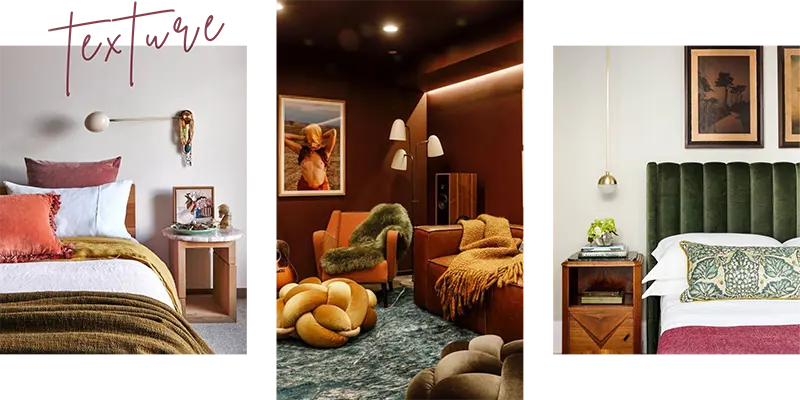
Texture transforms spaces through touch and sight, influencing the atmosphere from sleek elegance to cozy warmth. It plays a crucial role in the overall ambiance, enhancing the dimensionality and engagement of a design.
Image source: Pinterest
Creating Tactile Experiences with Texture
Tip: Mix various textures in fabrics, materials, and surfaces to enrich the environment.
"Integrating a combination like velvet cushions, linen drapes, and a natural wood coffee table can elevate the sensory appeal, adding comfort and visual depth to your living space."
Texture's role isn't just about how things feel. It brings a unique dimension to interiors, making spaces more inviting and engaging. In the US, texture is often defined by materials like reclaimed barn wood, rough-hewn shiplap, and rugged industrial concrete, which dominate popular styles like Modern Farmhouse and Industrial Chic. These surfaces invite touch and contribute to a feeling of authentic, layered history within a contemporary design element.
Experimenting with different textures can transform a room from flat to fascinating. Try combining smooth leather with soft, plush fabrics or adding a rough, rustic wood piece to a sleek, modern decor to see how these textures play off each other, creating a more dynamic and inviting atmosphere.
Mixing Textures for Dimension
Tip: Layering textures can add depth and interest to any space.
"A plush shag rug over sleek hardwood floors, coupled with soft throw pillows on a sturdy leather couch, can create a layered, inviting space."
The mix of textures can create a sense of depth that makes interiors feel more lived-in and personal. Ralph Lauren's home collections beautifully demonstrate how blending different textures can achieve a luxurious, layered look.
Experimenting with layering different textures in your home can reveal new ways to enhance its aesthetic and comfort. Whether it's through rugs, throws, or wall art, each element can contribute to a richer, more nuanced design.
Balancing Smooth and Rough Surfaces
Tip: Strategically contrast textures to craft a balanced and welcoming atmosphere.
"Combining a sleek marble tabletop with a rough, natural wood base can strike a perfect balance, adding sophistication to any dining area."
Finding the right balance between smooth and rough textures can dramatically affect a room's ambiance, creating a space that's both interesting and harmonious. Architect Louis Kahn's early American work, such as the Yale University Art Gallery (1953), masterfully contrasts textures.
Kahn deliberately juxtaposed the raw, brutalist finish of his innovative cast concrete structural walls with the sleek, precise smoothness of glass and steel details. This highlights how an intentional contrast of surfaces adds visual weight and sophistication to the space
Experiment with contrasting textures in your own designs to discover the perfect blend that brings warmth, depth, and character to your spaces.
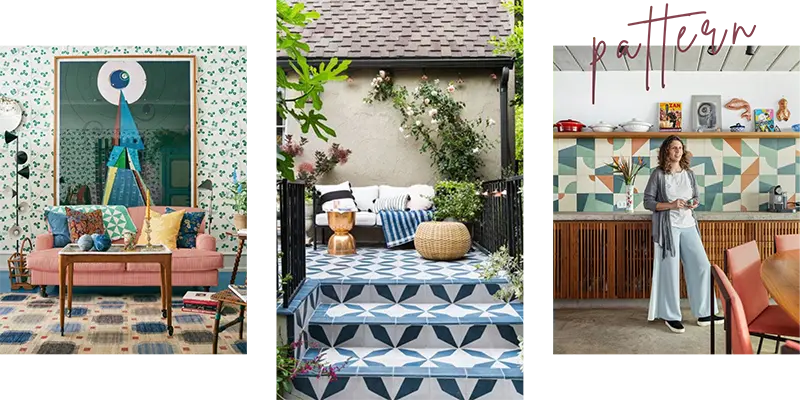
Element 7: Weaving Stories with Pattern
Pattern adds visual rhythm and interest, conveying personality and energy. Whether bold or subtle, patterns can unify a design, drawing attention and injecting character into a room.
Image source: Pinterest
Strategic Placement of Patterns
Tip: Use patterns strategically to enhance focal points without overwhelming the space.
"Incorporate patterned throw pillows on a solid sofa or a bold rug in a neutral room to add interest and personality without dominating the design."
Patterns can dramatically alter the character of a room, infusing it with energy and depth. Dorothy Draper excelled at using patterns to create vibrant, engaging interiors, demonstrating that with careful placement, patterns can breathe life into any space.
Experiment with patterns in various design elements to find the right balance. Whether through textiles, wall coverings, or flooring, patterns can serve as the visual spice that completes a room's design recipe.
Exploring Cultural Patterns in Design
Tip: Incorporate cultural patterns for depth and global flair.
"Frame intricate cultural textiles for the walls or use patterned ceramics as accents to introduce a rich layer of global influences into your design."
Cultural patterns add a narrative element to interiors, telling stories of heritage, tradition, and travel. Designers Charles and Ray Eames are primary US examples of using pattern through repetition and rhythm. Their graphic textile patterns, like Crosspatch and Dot Pattern, often used simple geometric, modular units repeated across the fabric.
This created a powerful rhythm that visually connected their furniture and interiors. They understood that repeating a simple form creates a sense of continuous motion and visual cohesiveness, adding energy without relying on complexity.
Experiment with cultural patterns to add uniqueness and personality to your spaces. This exploration can lead to a more nuanced and eclectic aesthetic that reflects a diverse range of inspirations.
Harmonizing Multiple Patterns
Tip: Unify diverse patterns with a consistent color palette for cohesion.
"Mixing a striped sofa, floral pillows, and geometric curtains in shared colors can harmonize different patterns, enriching the room's visual texture."
Successfully blending multiple patterns requires a keen eye for balance and harmony. Dorothy Draper, the pioneer of "Modern Baroque," is an influential American residential and commercial designer renowned for her ability to blend multiple, contrasting, eclectic patterns into a unified whole.
Her work, most notably at the Greenbrier Hotel, involved layering bold floral chintzes, wide black-and-white stripes, and large-scale geometric motifs. This style achieved unity by strictly coordinating color palettes across the disparate patterns.
Experiment with combining various patterns, focusing on color, scale, and rhythm to achieve a dynamic yet unified look. This approach can turn an ordinary room into a testament to your design prowess and creativity.
Final Thoughts: Crafting Timeless Designs with Mastery
Mastering the seven elements of design is fundamental to creating spaces that are not only aesthetically pleasing but also stand the test of time. Professional standards, as set by industry leaders like the American Society of Interior Designers (ASID), provide a foundational benchmark for excellence in these home interior design elements.
Each element, from the manipulation of space to the infusion of light, plays a pivotal role in crafting environments that reflect both expertise and artistic flair. As designers, the direction towards mastery is one of continuous growth and creativity, where each project presents a new opportunity for exploration and refinement.
Remember, in the dynamic world of design, these principles serve as a foundation upon which to build and innovate. Embracing these design elements with understanding and adaptability paves the way for exceptional creations that resonate with both designers and inhabitants alike. Let these principles guide you as you weave your unique stories into the fabric of the spaces you design, crafting timeless beauty that transcends trends and eras.
Want More?
Are you intrigued by the depth and potential of interior design? The exploration of home interior design elements is just the beginning!
Dive deeper into the realm of design with The Interior Design Institute's comprehensive online interior design course. Our curriculum is specifically tailored to align with US industry standards and your professional ambitions. You'll uncover the principles and practices that ignite creativity and excellence in the American design market.
Ignite your creativity, transform your passion into design mastery, and create spaces that tell your unique stories. Download the free course guide now and consider enrolling online today to start your journey.




 United States (ES)
 Argentina
 Australia
 Austria
 Belgium (NL)
 Bolivia
 Canada (EN)
 Chile
Chile
 Colombia
 Costa Rica
 Ecuador
 France
 Germany
 Hong Kong
 India
India
 Indonesia
 Ireland
 Japan
Japan
 Malaysia
 Mexico
 Netherlands
 New Zealand
 Paraguay
 Peru
Peru
 Philippines
 Qatar
Qatar
 Singapore
 South Africa
 Spain
Spain
 Switzerland (FR)
 United Arab Emirates
 United Kingdom
 Uruguay