Art Deco Interior Design in South Africa: A Guide for Aspiring Designers
Walking past the Mutual Building in Cape Town shows you the power of geometric order. Those sharp granite lines and gold leaf details aren't just for show. They teach us how to command a room using symmetry instead of clutter. We wrote this guide to help you use Art Deco interior design in South Africa to build authority into your projects. You'll learn how to stop filling spaces and start designing for impact.
In short, here are the basics.
- Master the Aesthetic: An Art Deco inspired interior design relies on bold patterns like zigzags, triangles, and sunburst motifs.
- Choose Materials: Use chrome, stainless steel, glass, and lacquer. We suggest using exotic woods like ebony alongside silk and velvet to create a unique Art Deco aesthetic.
- Embrace Colours: Try using deep yellows, reds, and blues. Balance these with black and chrome accents to create a refined Art Deco colour palette.
By understanding the Art Deco design style, you can create an interior that exudes glamour and timeless appeal. Whether you're updating a single room or designing an entire Art Deco interior, incorporating geometric patterns and a bold colour scheme will help you capture the essence of this iconic era.
Image source: Pinterest
What is Art Deco Interior Design?
Art Deco interior design began with the 1925 Paris Exhibition. This event debuted French Art Deco interior design ideas that reached South African shores during the mining boom. This style stood for modern sophistication and a belief in technology.
In South Africa, the style transformed our city centres. Architects used these geometric rules for monuments like the Mutual Building in Cape Town and Anstey's in Johannesburg. The look defined South African industrial power throughout the 1920s and 1930s. This early 20th century interior design also influenced high-end apartments in Durban and Pretoria. This local adaptation mixed European elegance with the hardy materials needed for our climate.
Key Art Deco Characteristics and Materials
Geometric Shapes and Motifs
South African Art Deco design focuses on simple, streamlined forms. Art Deco key elements include zigzags, triangles, and sunburst motifs. These shapes provide a sense of elegance and order. You can use these patterns in carpet designs or wall panels to ground a room and achieve a professional Art Deco interior.
Art Deco Materials and Window Treatments
High-end Art Deco materials like chrome and lacquer show the luxury of these interiors. You can layer textures by mixing marble with soft velvets. This contrast creates the depth needed for a high-end look. In South African homes, window treatments often feature heavy velvet drapes with geometric pelmets to manage light. You can also use frosted glass partitions to let light flow while keeping a structured frame.
Art Deco Colour Schemes
The palette for Art Deco interiors is typically bold. We often use deep yellows, reds, and blues. These are complemented by black and chrome to add drama. Choosing the right colour schemes helps you set a professional mood. In coastal properties, we often see these bold tones used in sun trap rooms to maximise natural light.
Modern Art Deco Interior Design Ideas
1920s Style Furniture
Pieces feature sleek, streamlined forms. They often use a mix of wood, leather, and metal. Use decorative inlays and polished finishes for your modern Art Deco interior design. In South Africa, this often means using rich hardwoods like Kiaat or Rhodesian Teak for sideboards to add warmth to cooler room orientations.
Lighting and Glamour Art Deco
Lighting fixtures in this style are dramatic art pieces. They feature glass and chrome. Their shapes match other geometric forms in the space for a cohesive look. Local designs often favour tiered glass pendants that mimic skyscraper architecture to add Art Deco glam to the room.
Decorative Accents
Mirrors and inlays add depth and brightness. Use these pieces to reflect light and make smaller urban rooms feel expansive. Accents often feature colourful lacquer or Bakelite to add industrial character to the space. These details define that high glamour Art Deco look.
Image source: Pinterest
Applying Art Deco Principles in Interior Design
Space Planning
Consider how to balance decorative pieces with a functional layout. This helps you keep a sleek and uncluttered space. In South Africa, designers used grand entryways and circular foyers to create a sense of arrival. These concepts connect social areas to make entertaining feel effortless.
Colour Schemes
Choose bold and sophisticated colours in a balanced way. This strategy highlights the luxury of your design. Designers in Johannesburg often chose high-contrast pairs like black and white to mimic early jazz clubs. Also, using gold and silver finishes adds a sense of luxury that defines the high-end South African look.
Inspiring Art Deco Interiors: South African Case Studies
Mutual Building, Cape Town (1940)
A masterpiece of South African design, the Mutual Building features spectacular carved stone and intricate murals. The space uses symmetrical layouts and rich metals to create one of the most famous interiors in the country.
Anstey's Building, Johannesburg (1935)
As a former department store, Anstey's Building shows the scale of Art Deco architecture. The design uses grand, vertical lines and decorative glass. The interior spaces were once the height of fashion and still use the original geometric motifs.
Surrey Mansions, Durban (1934)
Situated along the desirable Durban beachfront, Surrey Mansions represents some of our best residential Art Deco design. These buildings feature bold curves and sea-facing balconies. The interiors use light and reflection to create prestige and history.
Image source: Pinterest
Tips for Aspiring Interior Designers
- Study Local Architectural Motifs: Look at the 1930s apartment blocks in Berea and regional cinemas to see how South Africa adapted geometry.
- Mix Materials: Pair polished chrome with natural South African timber like Kiaat to create surfaces that feel both cool and warm.
- Layer Lighting: Use tiered glass lamps or shell-shaped wall sconces as focal points to add height to a room.
- Master Scale: Use large-scale patterns in rugs or curtains to define the boundaries of a space.
- Focus on the Frame: Choose internal doors with slim black frames to capture industrial progress while managing the harsh African light.
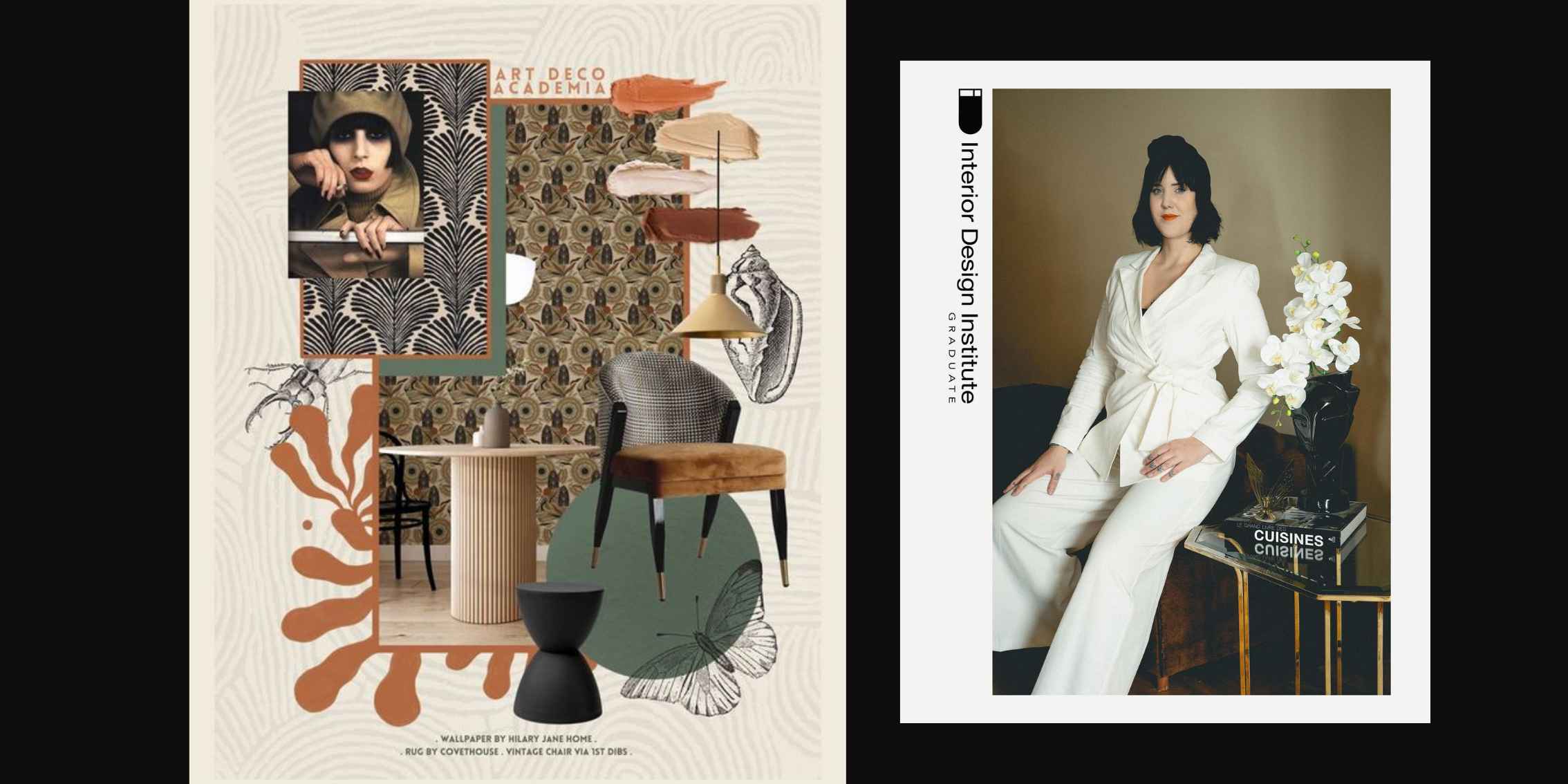
Image source: #IDIstudent Hilary Jane from @hilaryjanehome
Build Professional Expertise with an Interior Design Course
Explore the timeless elegance of Art Deco design with IDI and learn more about this period in Module 2 and Module 3 of our online interior design course.
As part of one of your assignments, you'll get to be creative by making mood boards like the example above by graduated #IDIstudent Hilary Jane from @hilaryjanehome.
Ready to channel the sophistication and glamour of the 1920s into your design projects? Continue your journey and download the free course guide today.










 Argentina
 Australia
 Austria
 Belgium (NL)
 Bolivia
 Canada (EN)
 Chile
Chile
 Colombia
 Costa Rica
 Ecuador
 France
 Germany
 Hong Kong
 India
India
 Indonesia
 Ireland
 Japan
Japan
 Malaysia
 Mexico
 Netherlands
 New Zealand
 Paraguay
 Peru
Peru
 Philippines
 Qatar
Qatar
 Singapore
 Spain
Spain
 Switzerland (FR)
 United Arab Emirates
 United Kingdom
 United States (EN)
 Uruguay